Surviving the Age of Information Overload
Context
Just think of the incident of September 8th and 9th, a time when we were flooded with information, nobody knew how to react to the situation, situational awareness was nowhere to be seen. People on social media and other platforms were going crazy with rumors and even important news was being manipulated for the sake of hooks. That created a sense of restlessness among the citizens and chaos around the city, and also boosted the protest in a negative way.
Let’s take another example of mine for a while. I also used to consume a lot of content back then, thinking I was getting more knowledge and ideas related to a bunch of different fields, but it barely applied in a practical way in order to improve my life. It was just a piece of information stored in my brain, making myself the false sense of being informed. Illusion?? you heard it right, illusion. Let’s take a deep dive into another section.
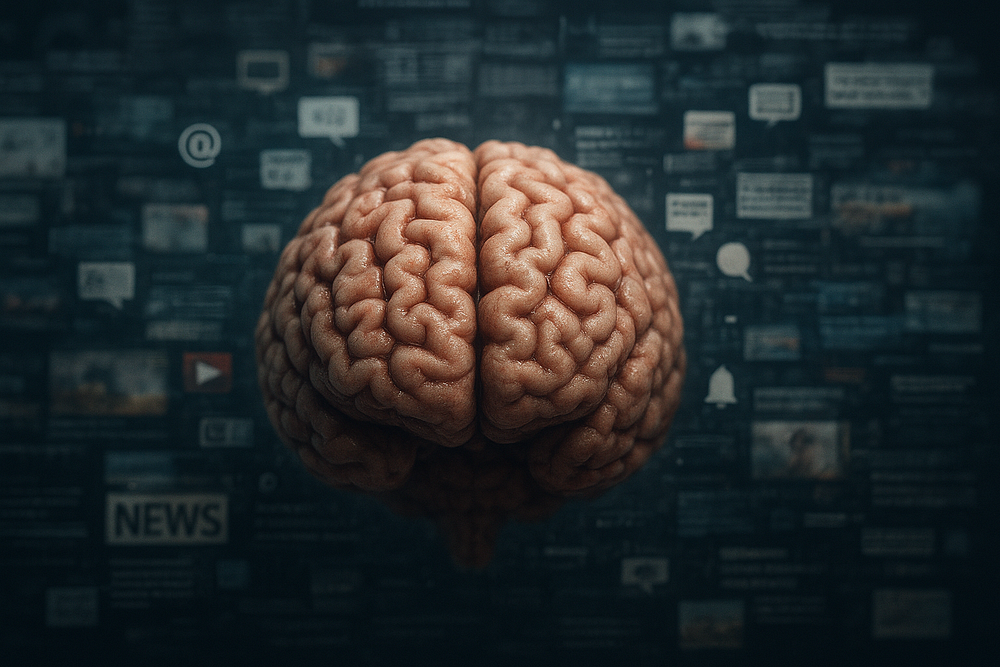
The illusion/False sense of being informed
This is the age of social media and technology, where the consumption of content is at its peak. According to sqmagzine.co.uk, “People use social media on an average of 2.4 hours daily “, which is pretty high. The social media algorithm and content platform make a very addictive platform to hook user into their site for getting more engagement on their app, which impacts the user to consume more amount of content. The real problem isn’t a user consuming more amount of content or information; the real problem is that they don’t practically use this information to improve their life and lifestyle. It is making people more emotionally unstable and mentally disturbed due to content patterns affecting their personal and social lives. Emotional mood swings during the course of a fortnight are crazy, due to the social media algorithm that serves different genres of content that influences how we feel.
Easy Access to Content
Social media has increased and simplified content distribution. Different social media platforms serve us various forms of content, long-form content, and short-form content, allowing user more convenience to use the platform. It has made people so easy to access that people are becoming addicted to it, and it has a huge impact on their decisions and even in their thoughts and lifestyle. Allowing for the consumption of more information and content by the user.
The Real Game of Algorithm
Social Media Algorithms are designed to hijack the attention of people in order to make them stay and use their platform for a longer period of time. It is more complex than you think. Sense of urgency without relevant worth, like how apps and media design the algorithmic notification triggers that impact our quick response, leaving important things halfway. The algorithm makes sure that user are engaged with their platform for a longer duration of time.
FOMO Effect
FOMO makes sure people are updated in the digital world, constantly chasing validations and approvals from others. It boosts the pressure to consume more content and information. It is one of the major factors that every social media platform puts as their priority to make people hooked and engaged on their platform. People wanted to follow the new trend today due to pressure from social media, affecting their other work and even their lifestyle. Showing off has become a major part that forces people to consume more content on the platform.
How to Survive information Overload :
Let’s see with some survival tips with some bullet pointers
- Limit the content consumption in Social Media
One of the keys to survival is to limit the content consumption on Social Media. Try to watch those videos, read those articles that align with your goal. Limit your screen time and always focus on taking action rather than doomscrolling. Here are some tips to limit content consumption on social media :
: Only follow the necessary pages and accounts.
: Manage your content preferences.
: Organize all your videos in a playlist to make it accessible fast and less addictive.
2. Use productivity booster apps
By using productivity tools, you can increase your attention span. Here are some productivity tools you can use to save from it :
: Ad blockers
: Notion
: To-do list apps
: Focus Music
All the tools mentioned here are very useful in our daily lives and will surely help boost our productivity and efficiently reduce information overload.
The PRO tip to survive it :
The pro tip is to have a purpose or a goal. Here is how it works:
Step 1: Make a to-do list before going to sleep every night.
Step 2: Make sure to follow the to-do list the next day and tick all the tasks you completed throughout the day.
Step 3: At last, write a journal about your day and experience while completing other tasks.
Step 4: After completing your work, reward yourself and do it again and again.
Why is it even effective?
It makes you busy and gives a sense of completion, and makes you feel more achievable. Rewards give a dopamine hit to your brain, and it craves more and more rewards as you get more by completing your tasks on a daily basis, which makes you more productive and motivates you to work more and complete the tasks
Conclusion
There is no doubt that social media has changed the information and technology era forever by connecting a lot of people in a single click. But the use of more social media and content consumption can lead to information overload. User should be more aware of it and consume only meaningful content and ideas that can help them grow in their life. It is very important to have a purpose to escape from the age of information overload.
Really insightful take on how we're drowning in content but starving for meaningful action. The productivity framework at the end is practical and addresses the root issue
ReplyDelete